

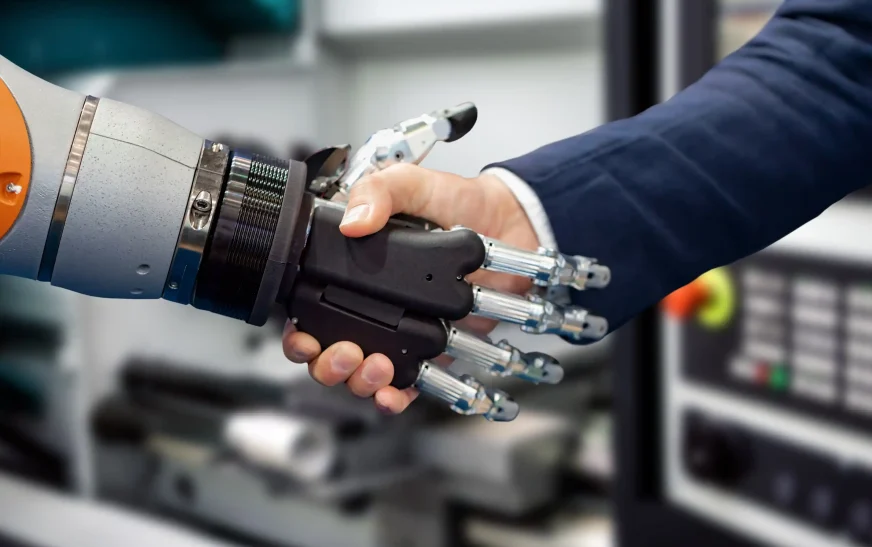
In 2025, automation is no longer a competitive advantage reserved for large enterprises—it is a necessity for businesses of all sizes. Rising operational costs, increasing customer expectations, and rapid technological advancements have made manual processes unsustainable. Businesses that fail to embrace automation risk falling behind more agile, efficient competitors.
Automation is fundamentally about working smarter, not harder. By leveraging technology to streamline workflows, organizations can improve efficiency, reduce errors, and unlock new growth opportunities.
The Growing Pressure on Modern Businesses:
Today’s businesses operate in an environment defined by speed and scalability. Customers expect faster response times, personalized experiences, and consistent service across channels. At the same time, teams are under pressure to do more with fewer resources.
Manual processes slow down operations, introduce human error, and limit scalability. Automation addresses these challenges by enabling repeatable, reliable execution at scale.
Operational Efficiency and Cost Reduction:
One of the most immediate benefits of automation is improved efficiency. Automating repetitive tasks such as data entry, invoicing, reporting, and customer follow-ups frees employees to focus on strategic and creative work.
Automation reduces labor costs, minimizes errors, and accelerates turnaround times. Over time, these efficiency gains translate into significant cost savings and improved margins.
Improved Accuracy and Consistency:
Human error is inevitable in manual workflows. Automation ensures processes are executed consistently according to predefined rules. This is especially important in areas such as finance, compliance, and supply chain management, where accuracy is critical.
Consistent execution improves reliability, builds trust, and reduces rework caused by mistakes.
Scalability Without Complexity:
As businesses grow, manual processes struggle to keep up with increased volume. Hiring more staff is costly and often inefficient. Automation allows organizations to scale operations without a proportional increase in headcount.
Automated systems handle higher workloads seamlessly, enabling businesses to expand while maintaining quality and control.
Enhancing Customer Experience:
Automation plays a key role in delivering better customer experiences. Automated chat support, personalized email campaigns, self-service portals, and CRM workflows ensure faster responses and consistent communication.
Customers benefit from efficiency and convenience, while businesses build stronger relationships and loyalty.
Data-Driven Decision Making:
Automation enables better data collection and reporting. Automated systems capture real-time insights across operations, sales, and marketing, providing leaders with accurate information for decision-making.
Access to reliable data improves forecasting, performance tracking, and strategic planning.
Preparing for the Future of Work:
In 2025, automation complements human talent rather than replacing it. Employees spend less time on routine tasks and more time on innovation, problem-solving, and customer engagement.
Businesses that embrace automation create more engaging roles and attract talent seeking meaningful work.
Automation is no longer optional. In 2025, it is a foundational capability for efficiency, scalability, and competitiveness. Businesses that invest in automation today position themselves for sustainable growth tomorrow.