

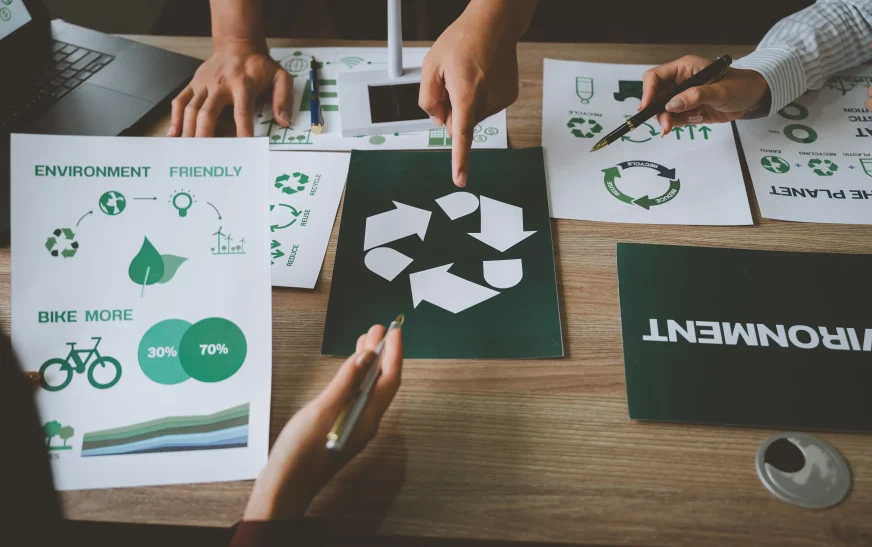
For businesses facing rising costs, regulatory pressure, and growing consumer demand for sustainability, the circular economy offers a compelling solution. By moving away from linear production models, companies can reduce waste, improve efficiency, and unlock new sources of value. In 2025, circular economy strategies are becoming an essential component of competitive and future-ready businesses.
One of the most immediate benefits of the circular economy for businesses is waste reduction. Traditional production processes often generate significant waste during manufacturing, distribution, and disposal. Circular practices such as material recovery, recycling, and by-product reuse help companies minimize waste sent to landfills. This not only reduces environmental impact but also lowers waste management and disposal costs.
Circular economy models also help businesses maximize the value of their resources. Instead of treating used products or materials as waste, companies can recover and reintroduce them into the production cycle. Refurbishing, remanufacturing, and reselling products extends their lifecycle and generates additional revenue streams. Many businesses are discovering that secondary markets can be just as profitable as primary sales.
Product design plays a crucial role in enabling circular value creation. Designing products for disassembly and repair makes it easier to recover valuable components and materials. Modular designs allow businesses to upgrade parts without replacing entire products, reducing material use and increasing customer satisfaction. These design strategies also enhance brand reputation by demonstrating a commitment to sustainability.
Supply chain optimization is another area where the circular economy delivers value. By sourcing recycled or renewable materials and working closely with suppliers, businesses can reduce dependency on volatile raw material markets. Closed-loop supply chains improve transparency, reduce risk, and create more stable sourcing strategies.
Customer relationships are strengthened through circular business models. Offering repair services, take-back programs, or leasing options encourages long-term engagement and loyalty. Customers increasingly prefer brands that align with their environmental values, and circular practices provide tangible proof of corporate responsibility.
Digital technologies further enhance circular economy implementation. Data analytics, tracking systems, and artificial intelligence help businesses monitor product lifecycles, optimize inventory, and forecast material recovery. These insights enable smarter decision-making and more efficient resource use.
By embracing the circular economy, businesses can transform sustainability challenges into strategic advantages. Reduced waste, optimized resources, and innovative revenue models position companies to thrive in an economy where sustainability and profitability go hand in hand.