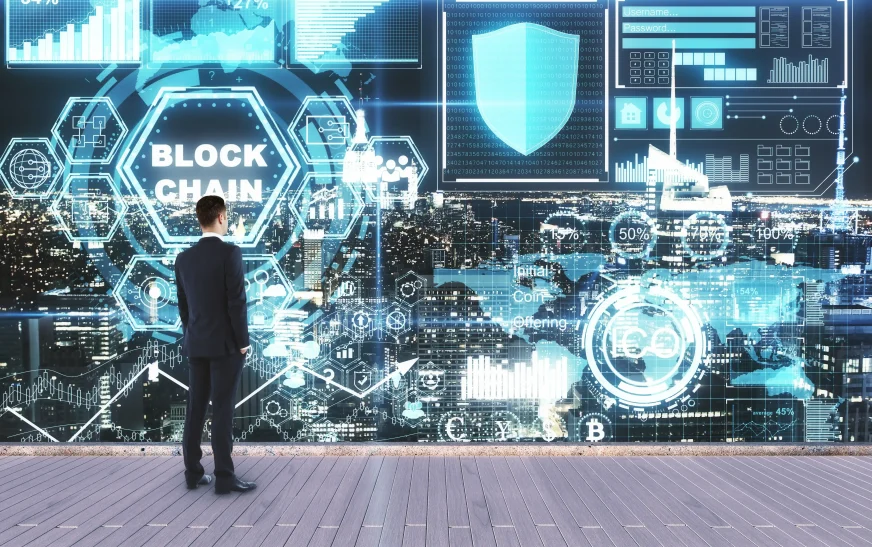

While blockchain is often associated with cryptocurrencies, its real-world applications extend far beyond digital money. Blockchain technology is transforming industries by enabling secure, transparent, and decentralized solutions to complex problems.
Understanding these applications reveals why blockchain is becoming a foundational technology across sectors.
Supply Chain Transparency:
Blockchain enhances supply chain visibility by recording every step of a product’s journey—from sourcing to delivery. This transparency improves traceability, reduces fraud, and ensures authenticity.
Industries such as food, pharmaceuticals, and manufacturing use blockchain to verify product origins and improve compliance.
Healthcare Data Management:
In healthcare, blockchain enables secure sharing of patient records while maintaining privacy. Patients control access to their data, and providers access accurate, up-to-date information.
This improves care coordination, reduces errors, and strengthens data security.
Financial Services and Payments:
Beyond cryptocurrencies, blockchain supports faster, more secure cross-border payments and settlement systems. Smart contracts automate transactions, reducing intermediaries and operational costs.
Financial institutions use blockchain to improve efficiency and transparency.
Smart Contracts and Automation:
Smart contracts are self-executing agreements coded on a blockchain. They automatically enforce terms when predefined conditions are met.
Smart contracts reduce manual processing, minimize disputes, and increase trust in business transactions.
Digital Identity Verification:
Blockchain-based digital identities enable secure, verifiable credentials for individuals and organizations. This simplifies onboarding, reduces fraud, and enhances privacy.
Governments and enterprises use blockchain identities for authentication and access control.
Real Estate and Asset Management:
Blockchain streamlines property transactions by digitizing records and automating processes. Ownership transfers, title verification, and escrow services become faster and more transparent.
Tokenization of assets also enables fractional ownership and improved liquidity.
Intellectual Property Protection:
Creators use blockchain to timestamp and register intellectual property, establishing proof of ownership. This protects digital assets and simplifies licensing.
The Broader Impact of Blockchain:
Blockchain’s real value lies in trust without intermediaries. By enabling secure, transparent interactions, it reduces friction and increases efficiency across industries.
Blockchain is far more than cryptocurrency. Its real-world applications are reshaping how businesses manage data, trust, and transactions—making it a key technology for the future.